India 2026 NGO Energy Access: Carbon Revenue, Mini-Grids and Anchor Loads
By Sudarshan Karweer · sudarshan@growthifye.com · +91 84510 99371 (Call / WhatsApp) · 2026-08-25
India’s NGO energy access market in 2026 is moving beyond basic CSR-funded solar lanterns and one-off village systems. The more durable opportunity now lies in carbon-backed rural mini-grids, anchor-load-led community energy models, and bankable operating structures that can support clean cooking, livelihoods, and local service delivery together. For Indian corporates, developers, lenders, DISCOM-facing policymakers, and impact investors, the key question is no longer whether decentralised renewable energy can work. The real question is how to structure it so that projects can survive low rural demand density, tariff sensitivity, payment collection risk, and long MRV cycles.
This is where NGOs are becoming important market makers. They are no longer only implementing partners. In many districts, NGOs now originate demand, aggregate communities, manage inclusion safeguards, support last-mile collections, and create the data trail required for carbon monetisation and outcome-based funding. For advisory firms, EPC players, and project financiers, the 2026 opportunity is to design NGO-led energy access platforms that combine productive rural loads, verifiable emissions reduction, and realistic revenue layering.
Why the 2026 NGO energy access opportunity has shifted
In 2026, standalone household electrification is not enough to make most rural energy-access projects financially resilient. Grid extension has expanded, but reliability and quality remain uneven in many geographies. NGOs working in aspirational districts, tribal belts, forest-fringe settlements, riverine regions, and weak-grid agricultural clusters increasingly report that the real demand is for reliable daytime and evening power for clinics, schools, drinking water pumping, irrigation support, micro-enterprises, cold storage, and telecom-linked services.
That changes project design.
Instead of sizing systems only around household lighting loads of 30-100 Wh/day, newer projects are being structured around mixed demand portfolios where anchor and productive loads can account for 40-70% of total annual energy sales. This matters because village-only residential demand often produces low plant load factor and weak cash generation. By contrast, a mini-grid serving a dairy chilling point, flour mill, rice huller, digital service centre, or rural health facility can improve utilisation and revenue predictability.
In many states, NGOs are also confronting a funding shift:
- CSR committees increasingly ask for measurable development outcomes, not just asset distribution
- Grant providers want stronger impact MRV and longer-term operating plans
- Carbon buyers prefer high-integrity methodologies with auditable usage data
- Lenders and blended-capital providers expect clearer cash-flow waterfalls and maintenance obligations
As a result, NGO energy access is becoming a structured infrastructure-plus-impact business, not merely a social programme.
Mini-grid economics: what works in rural India in 2026
A practical mini-grid for NGO-led deployment in 2026 generally falls into three categories:
- Nano and micro village systems below 25 kW for remote habitations
- Community mini-grids in the 25-250 kW range serving mixed residential and productive loads
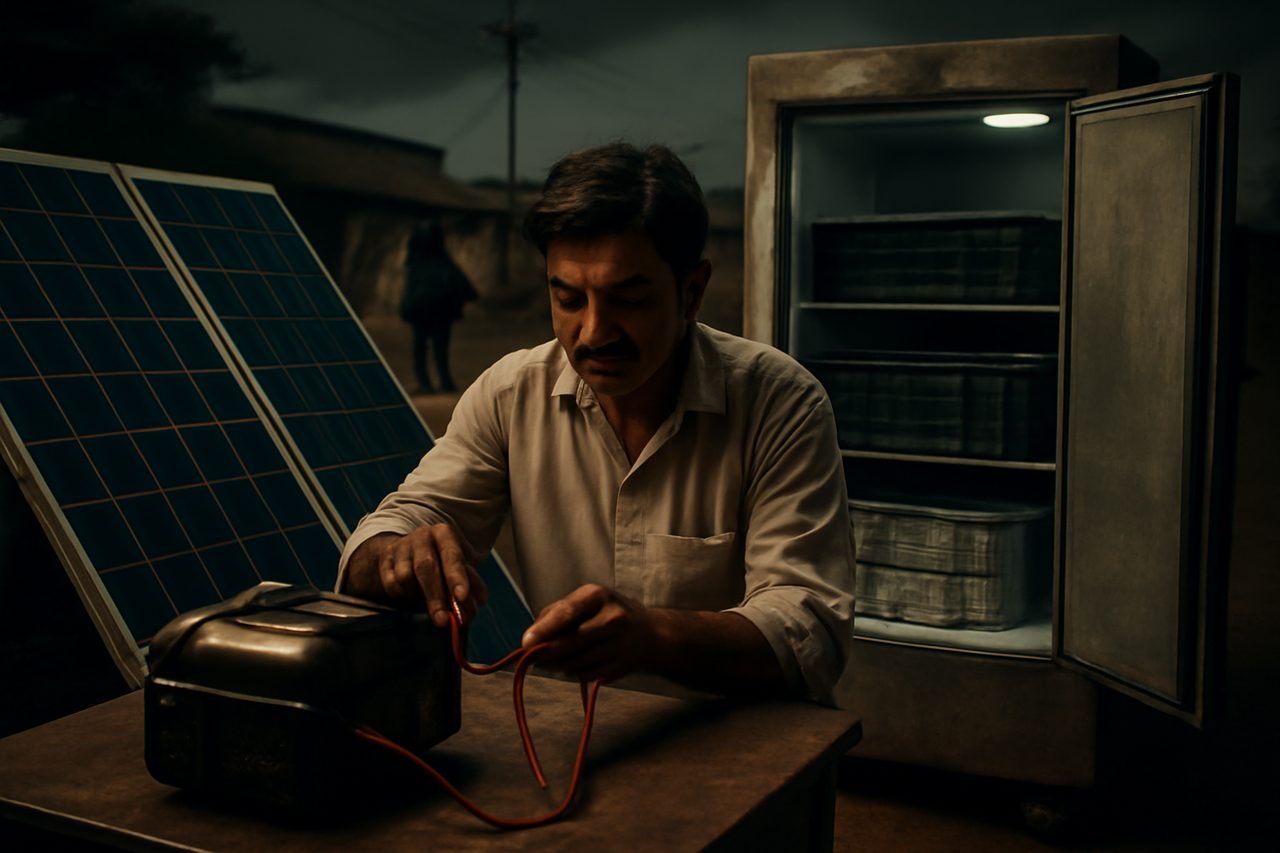
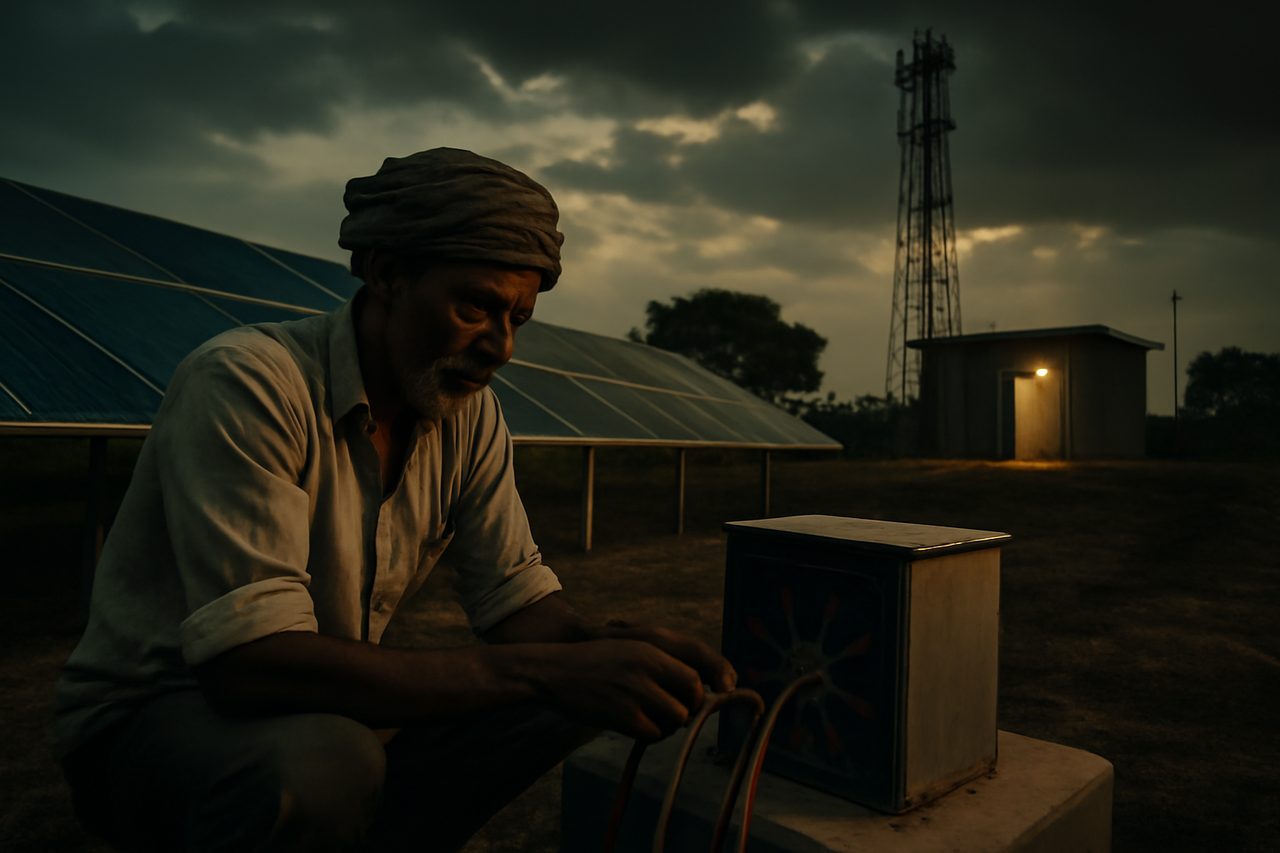
- Anchor-led systems above 100 kW where a telecom tower, institution, agro-processing cluster, water scheme, or cold-chain load supports village supply
Indicative capex ranges in 2026 vary by storage hours, site conditions, and distribution network scope, but practitioners are broadly seeing:
- Solar DC nano-grids: Rs 1.2-1.8 lakh per kW equivalent where network and appliance scope is limited
- Solar AC mini-grids with batteries and LT distribution: Rs 1.6-2.6 lakh per kW for many village applications
- Productive-use-heavy systems with stronger distribution and three-phase capability: Rs 2.2-3.5 lakh per kW
Battery sizing is often the variable that breaks project viability. In weak-demand villages, oversizing storage for evening residential peaks can push levelised costs too high. Many bankable NGO models therefore use demand management, staggered service packages, prepaid metering, and productive daytime loads to reduce battery intensity per unit sold.
In operating terms, viable community systems typically need one or more of the following:
- Realised tariffs in the range of Rs 18-35 per kWh for households and micro-enterprises where service is premium, reliable, and diesel-displacing
- Higher service-package yields through fixed monthly plans for lighting, fan, television, or commercial sockets
- Productive-load tariffs in the range of Rs 14-24 per kWh depending on uptime commitments and diesel replacement economics
- Anchor customers paying effective blended power costs that still compare favourably with diesel-backed alternatives often in the Rs 22-35 per kWh range
These numbers are highly location-specific, but the core lesson is consistent: household-only tariffs aligned with subsidised central-grid benchmarks are rarely enough to cover full system lifecycle costs in remote settlements. NGO projects need cross-subsidisation through anchor loads, grants, CSR support, carbon revenue, appliance finance, or outcome-based incentives.
The anchor-load model NGOs should prioritise
For 2026, the strongest differentiation for NGO energy access platforms is not simply installing more village solar. It is building rural demand around anchor loads that create dependable cash flow and social co-benefits.
The most bankable anchor loads in NGO-led portfolios today include:
- Drinking water pumping and purification systems
- Primary health centres, sub-centres, vaccine refrigeration and diagnostic equipment
- Government and low-cost private schools with digital classrooms
- Telecom infrastructure and shared digital connectivity points
- Dairy collection and chilling
- Rice milling, flour milling, oil expelling and spice processing
- Fisheries aeration and ice-making in coastal or inland aquaculture clusters
- Rural cold rooms for horticulture and FPO-linked aggregation
- Community irrigation and solar-powered lift systems where water governance is clear
Why do these loads matter? Because they improve daytime utilisation, reduce dependence on low-consumption households, and can justify stronger payment discipline. An NGO that already operates in livelihoods, health, or water can bundle energy service delivery into an existing programme, lowering customer-acquisition and trust costs.
A simple example helps. Consider a 120 kW solar-battery mini-grid in a weak-grid rural cluster:
- 35 kW average daytime agro-processing and dairy-linked demand
- 15 kW water and institutional demand
- 20 kW diversified commercial and micro-enterprise demand
- 25-30 kW evening household demand peak with load-limited service plans
If annual generation sold reaches 180,000-220,000 kWh and blended realisation reaches Rs 18-22 per kWh after collection losses, annual gross revenue can move into the Rs 32-48 lakh range. Add carbon revenue and targeted CSR support for social loads, and the project can become structurally stronger than a household-centric system selling fewer than 100,000 kWh a year.
Carbon revenue in NGO energy access: useful, but only if MRV is investable
Carbon income is now central to many NGO energy access business plans, especially for clean cooking, diesel displacement, and community mini-grids. But a recurring market mistake in India is treating carbon as headline upside rather than a disciplined operating workstream.
In 2026, realistic carbon structuring for NGO-led projects depends on four conditions:
- Clear baseline definition, especially where grid access exists but reliability is poor
- Device- or meter-level usage evidence strong enough for verification
- Aggregation across a sufficiently large portfolio to justify issuance and transaction cost
- Conservative pricing assumptions in financial models
For rural solar mini-grids, carbon claims often arise from avoided diesel use by enterprises, institutions, or backup generation rather than from simplistic grid-displacement narratives. For clean cooking, the monitoring burden is even higher because usage stacking remains a material concern. NGOs therefore need digital MRV systems from day one: smart meters, tamper-resistant usage logging, geotagging, appliance mapping, and field-audit protocols.
Practitioners in 2026 should avoid underwriting project viability on aggressive carbon assumptions. A sensible approach is to treat carbon as a secondary cash-flow layer with delayed receipts and haircut scenarios. Depending on methodology, project type, and buyer quality, realised values can vary widely, and payment timing may not match debt servicing cycles.
A more robust structure is:
- Base-case viability from tariffs, anchor loads and grant support
- Carbon as reserve-building or O&M-support income
- MRV costs embedded upfront in capex and operating budgets
- Revenue-sharing rules defined contractually among NGO, SPV, operator and community institution
For lenders and philanthropic capital providers, this discipline is critical. Carbon can improve returns and expand service quality, but weak data architecture can turn a promising portfolio into an audit and cash-flow problem.
Policy and regulatory points that matter in 2026
NGO energy access projects do not operate in a policy vacuum. While most decentralised systems sit outside the mainstream utility-scale procurement world, developers and advisors still need to navigate state regulations, local permissions, subsidy overlaps, and community asset governance.
In 2026, the main policy issues to watch include:
- State mini-grid and DRE rules where applicable, particularly treatment after future grid arrival or grid-strengthening
- Electricity distribution permissions for local sale and wiring in specific jurisdictions
- Safety compliance for low-voltage networks, battery systems and public institutions
- Convergence with livelihood missions, Jal Jeevan Mission-linked water assets, health infrastructure and rural development programmes
- Carbon registry and claims integrity where the same intervention also receives grant or CSR support
The grid-arrival question remains especially important. Communities often fear that a privately or NGO-supported mini-grid may become redundant once conventional supply improves. Developers should respond with contract design, not assumptions. In practice, good models in 2026 increasingly include one of three pathways:
- Continued operation in parallel where reliability and service quality justify premium energy use
- Conversion into backup or day-service supply for productive loads and institutions
- Interconnection-ready design where technically and legally feasible in the future
For policymakers, the objective should not be to see mini-grids as competitors to DISCOMs. In remote and under-served pockets, they should be treated as service-extending infrastructure that reduces diesel use, strengthens local economies, and can defer expensive network reinforcement where demand remains modest.
How NGOs, EPC firms and financiers should structure delivery
The strongest NGO energy access platforms in India now use a multi-entity delivery model rather than a single grant-recipient approach. A practical structure often looks like this:
- NGO as community mobiliser, inclusion lead, beneficiary aggregator and impact steward
- Technical partner or EPC as designer, builder and warranty-backed supplier
- Local operator or franchisee for collections, service and first-line maintenance
- SPV or trust-linked project vehicle for asset ownership and revenue ring-fencing
- Outcomes or carbon manager for MRV, reporting and buyer engagement
This model helps solve a common problem: NGOs are trusted locally but may not want balance-sheet exposure to asset performance and collections. Meanwhile, EPC contractors can build systems but are often not suited to long-term rural engagement. Separating these roles improves accountability.
Key contracting points for 2026 include:
- Minimum uptime obligations and response times for faults
- Spare-parts stocking norms, especially for inverters, BMS components and metering devices
- Community tariff disclosure and grievance mechanisms
- Theft, bypass and non-payment protocols
- Clear allocation of carbon rights and data rights
- Step-in rights for funders where operator performance fails
For project finance, lenders and catalytic capital providers should push for portfolio thinking. Single-village systems are too exposed to local shocks. Aggregated district or multi-district portfolios allow better diversification across demand, weather, collections and social factors. They also make MRV and carbon issuance more economical.
A due-diligence checklist for Indian stakeholders
For C&I companies deploying CSR capital, RE developers entering NGO energy access, or financial institutions exploring blended structures, the following diligence questions are decisive:
- What share of energy demand comes from anchor and productive loads versus households?
- Is the tariff model based on actual ability-to-pay and competing diesel or unreliable-grid costs?
- Are smart meters, remote monitoring and data retention systems built in from commissioning?
- What is the battery replacement plan, and who funds it?
- How are community institutions involved in dispute resolution and collections?
- Are carbon assumptions conservative, contracted, and backed by verifiable baseline logic?
- What happens if the central grid improves supply quality within two to four years?
- Is there a portfolio-level O&M support structure, not just village-level volunteers?
- Are social loads such as schools and clinics contractually protected from arbitrary disconnection?
- Is there an appliance and livelihood strategy to grow demand after commissioning?
These questions separate demonstration projects from scalable infrastructure.
The 2026 takeaway is straightforward. NGO energy access in India is no longer only about access hardware. The scalable opportunity lies in combining community trust, anchor-load economics, disciplined MRV, and operationally credible rural energy platforms. Projects that integrate water, health, livelihoods, clean cooking and productive power can generate stronger utilisation, clearer impact, and better capital alignment than household-only interventions.
For developers, this opens a new distributed-energy pipeline. For corporates, it creates a more measurable CSR and supply-chain inclusion strategy. For policymakers and utilities, it offers a pragmatic route to serve geographies where conventional supply remains weak in practice. And for lenders, the most investable projects will be those that treat rural energy access as a managed portfolio with contracts, data discipline and realistic tariffs.
If you are evaluating NGO energy access projects in India across CSR funding, community mini-grids, carbon MRV, clean cooking or rural anchor-load design, contact Growthifye’s advisory desk for project structuring, technical diligence, EPC support and financing strategy.
About the author

Founder & CEO, Growthifye — engineering and financing India's clean-energy transition.
Want this analysis applied to your project?
Talk to our team