India 2026 NGO Energy Access: CSR Rule 135, EPR and Utility Partnerships
By Sudarshan Karweer · sudarshan@growthifye.com · +91 84510 99371 (Call / WhatsApp) · 2026-08-25
India’s NGO energy-access market in 2026 is no longer just about donor-funded solar lanterns or isolated village systems. The investable opportunity now sits at the intersection of CSR deployment, utility partnership models, producer-responsibility obligations, clean cooking transitions, and measurable social-impact delivery. For corporates, developers, lenders and policymakers, the practical question is not whether community energy matters, but how projects can be designed so they are compliant, financeable, scalable and auditable.
For NGOs working in rural solar, clean cooking and community energy, the old approach of grant-first programme design is giving way to a more structured framework: align with Schedule VII-eligible CSR themes, build delivery partnerships with DISCOMs and state agencies, integrate appliance and equipment stewardship under circular-economy rules where relevant, and generate defensible measurement, reporting and verification (MRV) outputs that satisfy boards, auditors and co-funders.
This article examines a distinct 2026 angle for India’s NGO energy-access sector: how CSR under Companies Act Rule 135, Extended Producer Responsibility (EPR)-adjacent corporate sustainability spending, and utility partnerships can together create a durable pipeline for energy-access programmes. For Indian C&I consumers, renewable developers, lenders, utilities and policymakers, this matters because community-energy programmes increasingly sit beside broader decarbonisation, livelihood and social-license objectives.
Why the 2026 NGO energy-access model is shifting beyond standalone grants
Between 2023 and 2026, three realities have pushed the market toward more structured models.
First, grant capital remains available, but corporate boards are demanding clearer additionality, governance and quantified outcomes. A village solarisation programme today is expected to report not just the number of systems installed, but uptime, beneficiary category, income impact, women-led enterprise outcomes, emissions reductions, and maintenance performance over 3-5 years.
Second, state utilities and public agencies are under pressure to improve reliability, reduce subsidy leakage, support productive rural demand, and deliver social infrastructure electrification without carrying every capex item on their own balance sheet. That creates room for NGO-facilitated partnerships in schools, anganwadis, primary health centres, drinking-water systems, and livelihood clusters.
Third, sustainability compliance in India is broadening beyond conventional energy reporting. Corporates increasingly want integrated programmes linking energy access with waste management, appliance replacement, battery collection, circularity, and community health outcomes. While EPR is not an energy-access funding mechanism by itself, it has created a boardroom language around traceability, material recovery, end-of-life responsibility and documented impact. Smart NGOs are using that language to structure cleaner, auditable community-energy programmes.
The result is a more sophisticated project architecture: CSR funds may pay for social capex and first-loss support, a utility or local body may provide site access and beneficiary integration, a developer or EPC partner may deliver systems under performance guarantees, and MRV systems may produce ongoing evidence for corporate reporting and future co-financing.
CSR Rule 135 in practice: where energy-access projects fit in 2026
Under Section 135 of the Companies Act and Schedule VII-linked CSR provisions, energy-access projects are typically structured under themes such as environmental sustainability, rural development, livelihood enhancement, health, education and women’s empowerment. In practice, the strongest NGO programmes in 2026 are those that avoid presenting energy as a standalone hardware intervention and instead package it around service outcomes.
Examples that boards approve faster include:
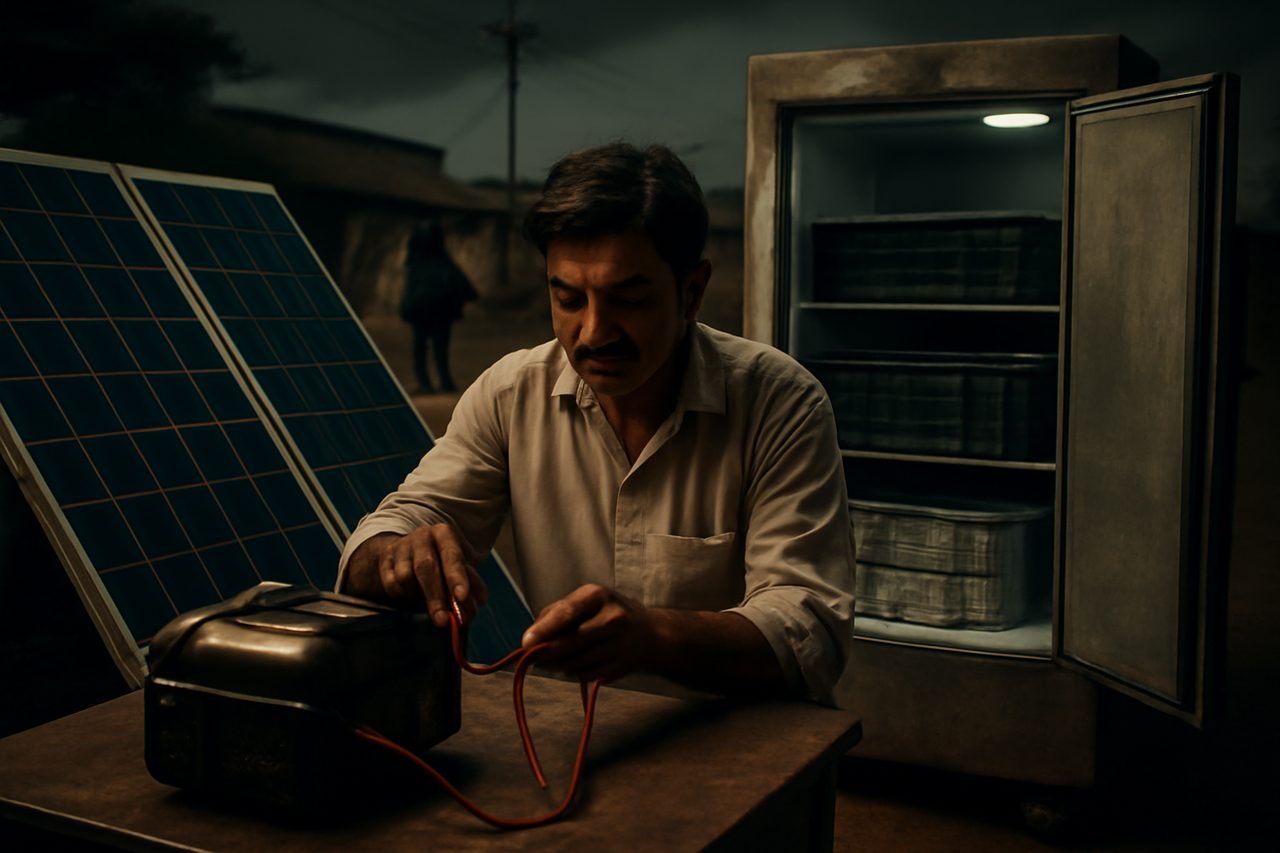
- Solarisation of primary health centres with vaccine refrigeration backup
- Clean cooking transitions for women’s self-help group clusters
- Solar-powered drinking water and filtration for aspirational districts
- Rural enterprise energy kits linked to skilling and livelihood targets
- Community cold storage for farmer-producer organisations
- Solarisation of hostels, schools and digital-learning centres
In 2026, typical CSR ticket sizes for NGO-led energy-access projects vary widely by geography and scope:
- INR 25 lakh to INR 75 lakh for single-district pilots
- INR 1 crore to INR 5 crore for multi-block implementation programmes
- INR 5 crore to INR 20 crore for multi-state thematic portfolios with MRV and third-party evaluation
For board approval, three design features matter most.
- Clear eligibility mapping to Schedule VII themes
- Ring-fenced implementation governance with registered NGO or Section 8 partner structures
- Outcome reporting that goes beyond capex utilisation certificates
For example, a clean-cooking programme replacing traditional biomass use with improved biomass, pellet, biogas or electric cooking solutions must report adoption persistence, refill or fuel-supply continuity, kitchen-air-quality benefits, and actual utilisation rates. A simple distribution count is no longer enough.
Similarly, a rural solar programme should show service reliability. In 2026, corporates increasingly expect at least quarterly operational reporting and annual independent verification for projects above INR 1 crore.
Utility and DISCOM partnership models NGOs should prioritise
The biggest missed opportunity in India’s energy-access market has historically been weak integration with utilities. In 2026, that is changing. NGOs that position themselves as delivery and community-engagement partners, rather than parallel electrification actors, can unlock larger and more durable programmes.
There are five partnership models worth prioritising.
1. Last-mile reliability support for public-service loads
In many districts, grid connectivity exists but reliability remains poor for critical services. NGOs can work with DISCOMs, health departments and CSR sponsors to install rooftop solar plus battery systems for public-service loads such as sub-centres, schools and water pumping.
Typical 2026 benchmarks:
- 5 kW to 25 kW rooftop systems for schools and health facilities
- INR 55,000 to INR 75,000 per kW for standard rooftop solar, depending on battery integration and civil scope
- Battery-backed systems pushing total project costs to INR 90,000 to INR 1.35 lakh per kW depending on chemistry and autonomy requirement
The value proposition for utilities is not wholesale energy substitution. It is service continuity, peak support and reduced outage-related social risk.
2. Productive-load clustering in weak-grid rural feeders
Instead of household-only systems, NGOs can aggregate tailors, flour mills, agri-processing units, sewing clusters, telecom-assisted service kiosks and dairy chilling points. This supports demand density and makes maintenance economics stronger.
A 20-50 kW community solar asset with battery support and a productive-load anchor can achieve better utilisation than purely residential systems. In many cases, effective delivered tariffs to end users may need to be held in the INR 8-14 per kWh range for enterprise viability, with social users cross-supported through CSR or grant funding.
3. Utility-linked clean-cooking pilots in peri-rural areas
As electric cooking and induction-based pilots expand in certain states, NGOs can act as adoption facilitators. This is especially relevant where feeders have improved supply windows and utilities want to stimulate demand without creating unmanaged peaks.
Programmes should combine:
- Appliance financing support
- User training and safety orientation
- Load-profile tracking
- Targeted support for low-income households or women-led enterprises
4. Solarisation of community infrastructure under local bodies
Panchayat buildings, community centres, water assets and livelihood hubs are often suitable for standardised solar packages. NGOs can aggregate sites, developers can execute EPC, and corporates can fund under CSR. Utilities benefit when such systems are appropriately net-metered or structured as behind-the-meter reliability assets where regulations permit.
5. Energy-plus-service models in aspirational districts
The strongest model in 2026 is not energy alone. It is solar plus cooling, solar plus irrigation efficiency, solar plus health diagnostics, or clean cooking plus livelihood improvement. Utilities and state administrations engage more readily when social outcomes are measurable and politically visible.
Where EPR-adjacent corporate sustainability priorities intersect with NGO energy access
Energy-access practitioners should be careful not to mislabel compliance budgets. EPR obligations apply to specific waste streams and product categories under separate regulatory frameworks. However, the governance tools and budget logic emerging from EPR programmes are highly relevant to NGO energy access.
Three intersections are especially important.
Equipment replacement and responsible end-of-life management
Rural energy programmes involve solar modules, inverters, batteries, cookstoves, induction units, LEDs, fans and small appliances. Corporate funders increasingly ask what happens at end of life. NGOs that incorporate collection protocols, vendor take-back clauses, battery replacement planning and approved recycler linkages gain credibility.
This is no longer optional. A CSR-funded project that installs hundreds of batteries or devices without a retrieval plan creates reputational risk.
Traceability and digital records
EPR systems have reinforced a discipline of asset tracking and documented material flows. Energy-access programmes can adapt this through QR-coded devices, GIS-tagged installations, digital beneficiary records and maintenance logs. These systems improve audit readiness and reduce leakage.
Integrated community sustainability programming
Some corporates now prefer area-based interventions where waste, water, energy and livelihoods are addressed together. An NGO that can combine clean cooking, solarisation of public infrastructure, village-level appliance stewardship and impact reporting is more likely to secure multi-year support than one offering a single-technology project.
For developers and EPC firms, this trend creates a new service line: lifecycle-aware social energy infrastructure. For lenders and philanthropic co-funders, it improves governance quality and lowers execution risk.
Commercial structuring: viable funding stacks for 2026 programmes
NGO energy-access projects in India are still not a one-size-fits-all asset class. The right funding stack depends on whether the intervention targets pure social infrastructure, household energy access, enterprise loads or mixed-use community assets.
In 2026, the most practical structures include:
- 100% CSR-funded capex for social assets with 3-5 year O&M reserve
- CSR plus state-scheme convergence for health, water or education assets
- Grant-funded first-loss support plus community tariff collection for productive-use systems
- Corporate philanthropy plus EPC performance guarantee plus local operator model
- NGO special-purpose vehicle structures for portfolio execution where scale justifies centralised procurement and MRV
A common mistake is underfunding O&M. For small rural solar and battery-backed systems, annual O&M can range from 2% to 5% of project cost depending on remoteness, battery chemistry and service-level expectations. If productive-use assets are included, field-service costs can be higher.
Another mistake is using household affordability assumptions that do not reflect actual willingness to pay. For many low-income rural users, monthly energy spending already exists through kerosene replacement, diesel usage, phone charging, biomass collection time, or unreliable appliance usage. However, adoption only improves when payment structures match cash flows.
That is why project design should distinguish among:
- Public-benefit assets funded as social infrastructure
- n- Household services requiring affordability support
- Enterprise users capable of paying commercial or near-commercial tariffs
- Anchor loads that can stabilise system economics
For lenders observing the sector, the takeaway is clear: the bankable element is often not the NGO itself, but the contracted payment support, ring-fenced O&M reserve, measurable service demand and quality of implementation counterparties.
MRV expectations in 2026: what funders, boards and policymakers now require
MRV is now central to NGO energy-access credibility. In 2026, a serious programme should report at four levels.
Asset-level MRV
- Installed capacity
- Device count
- Commissioning date
- GIS coordinates
- Uptime and downtime logs
- Maintenance events
Service-level MRV
- Hours of electricity or cooking access delivered
- Number and category of beneficiaries
- Health-centre service continuity
- Water pumping volume or refrigeration uptime where applicable
- Enterprise operating hours enabled
Impact-level MRV
- Diesel or kerosene displacement
- Estimated emissions reduction using documented methodology
- Women’s time savings in clean-cooking programmes
- Income uplift proxies or verified enterprise outcomes
- Education or health service improvements where causally attributable
Financial and governance MRV
- CSR spend drawdown versus milestones
- O&M reserve utilisation
- Tariff collection where relevant
- Grievance redressal records
- End-of-life retrieval and replacement tracking
In practical terms, projects above roughly INR 2 crore should budget explicitly for digital monitoring and third-party verification. Depending on scope, MRV costs may range from 3% to 8% of total programme budgets. Many organisations still treat this as overhead, but leading funders now treat it as core infrastructure.
For policymakers, better MRV creates two advantages: it improves scheme convergence and makes it easier to identify which delivery models should be replicated across districts or states.
What Indian developers, C&I firms and policymakers should do next
For renewable developers and EPC players, NGO energy access should not be seen as a low-margin CSR side activity. It is a strategic platform for district relationships, public-infrastructure execution, appliance-service ecosystems and future rural demand creation. Standardised 5 kW, 10 kW, 25 kW and 50 kW community-energy packages with monitored O&M can become a scalable business line when paired with credible NGO partners.
For C&I companies with CSR obligations, the best programmes in 2026 will be those that combine social legitimacy with operational rigour. That means multi-year commitments, proper maintenance budgets, district-level convergence, and digital MRV rather than one-time asset donation.
For lenders and philanthropic capital providers, diligence should focus on payment security, implementation governance, spare-parts planning, battery replacement assumptions, beneficiary engagement and data quality. Social impact alone does not rescue a poorly structured energy asset.
For DISCOMs and policymakers, the opportunity is to treat NGOs as last-mile mobilisation and service-delivery partners, especially for public-service loads, weak-grid communities and clean-cooking transitions. States that provide clear frameworks for utility collaboration, standard procurement templates and reporting formats will attract more credible implementation capital.
India’s 2026 energy-access landscape is moving toward integrated, accountable and partnership-driven delivery. The winning NGO programmes will be those that speak the language of CSR compliance, utility coordination, lifecycle responsibility, productive demand and hard MRV. That is where community energy becomes scalable rather than symbolic.
If your organisation is evaluating NGO energy-access programmes in India across CSR structuring, utility partnerships, clean cooking, rural solar, MRV or implementation design, contact Growthifye’s advisory desk for project strategy, diligence and execution support.
About the author

Founder & CEO, Growthifye — engineering and financing India's clean-energy transition.
Want this analysis applied to your project?
Talk to our team